 LinkedIn
  Email
EmailHow to Enhance Employee Skills: A Practical Manager’s Guide
Corporate training is a vital component of modern business strategy. It equips employees with the skills needed to thrive in a competitive market and ensures that employees are not left behind. These programs are more than just skills enhancement — they are a strategic investment in the future of the organization.
 Corporate training and development can lead to increased productivity. It also boosts employee satisfaction and retention. Organizations that prioritize corporate learning often see a positive impact on their bottom line. They are better prepared for future challenges.
Corporate training is not a one-size-fits-all solution. It can be tailored to meet the specific needs of a company. From leadership training to technical skills, the options are vast. This flexibility makes corporate training a powerful tool for growth.
Investing in corporate training is investing in the future. It fosters a culture of continuous learning and development.
Understanding Corporate Training: Definition and Importance
Corporate training encompasses structured learning programs designed to strengthen employee skills and knowledge. Far more than a means of teaching new competencies, it serves as a cornerstone for organizational growth, adaptability, and long-term success. With organizations facing constant transformation and disruption, these programs provide a vital framework for continuous learning and development, helping teams bridge skills gaps and stay aligned with changing business needs. Corporate training can take many forms — from leadership development and technical upskilling to compliance and role-specific learning — each program strategically tailored to support the unique goals of the organization.
Key Benefits of Corporate Training:
- Increases employee productivity and job satisfaction
- Enhances leadership and management skills
- Prepares employees for future challenges
- Aligns employee goals with organizational objectives
 Effective corporate training fosters a culture of learning and growth. This leads to improved morale and employee engagement. A motivated workforce is more innovative and productive. Organizations that invest in corporate learning often experience higher retention rates. Employees feel valued when they are given opportunities to grow. This investment pays off with reduced turnover costs.
Continuous corporate training and development aid in maintaining a competitive edge. It ensures that employees are prepared to tackle new challenges. Ultimately, corporate training supports the overall success of a business.
The Business Case for Corporate Training and Development
Investing in corporate training and development yields tangible benefits for businesses. It forms a critical component of strategic planning and execution. A well-trained workforce contributes directly to the bottom line.
Corporate training improves employee efficiency and effectiveness. As employees gain new skills, they are better equipped to meet organizational goals. This translates into enhanced productivity and performance.
Financially, corporate education programs are sound investments. The cost of training is often offset by increased revenue and reduced operational inefficiencies. Investing in human capital pays dividends over time.
Advantages of Corporate Training and Development:
- Enhances adaptability to market changes
- Supports strategic business objectives
- Improves customer satisfaction through better service
- Reduces costs associated with errors and rework
Organizations that prioritize corporate training enjoy a competitive advantage. Well-trained employees can innovate and lead the company forward. They are also more likely to engage with the company’s vision.
Employee retention is another critical benefit. Continuous development opportunities keep employees engaged and loyal. They are more likely to remain with companies that invest in their future.
In summary, corporate training and development are vital in sustaining organizational growth. They align employee competencies with business strategies. This alignment drives success and long-term viability.
Types of Corporate Education Programs
Corporate education programs are diverse, addressing various organizational needs. These programs cater to different skills and career stages. Understanding the types of programs available is crucial for effective implementation. A strong corporate training program includes both hard and soft skills. Employees benefit from a range of learning opportunities tailored to them. The right mix drives engagement and competence.
Effective corporate learning must cover leadership and management. These programs prepare employees for future leadership roles. Leadership training is crucial for succession planning.
 Technical and digital skills are increasingly vital. Programs in this area ensure employees adapt to technological advancements. Staying current with digital trends is essential for business competitiveness.
Compliance and regulatory training are non-negotiable. Companies must comply with industry standards and laws. Employees need up-to-date training in these areas for legal and ethical operations. Soft skills and communication are equally important. They enhance teamwork, problem-solving, and customer interaction. Developing these skills boosts overall workplace harmony.
Diversity, equity, and inclusion programs foster an inclusive culture. They educate employees on cultural competence and bias reduction. Such initiatives strengthen team collaboration and innovation.
Onboarding programs effectively integrate new hires. These programs reduce turnover and increase job satisfaction. Employees feel valued and prepared from day one.
Leadership and Management Training
Leadership and management training focus on developing future leaders. These programs build skills in decision-making, strategic thinking, and team management. They prepare employees for higher responsibilities.
Key components include conflict resolution and performance management. Leaders must handle diverse situations with confidence. Effective communication is another critical skill taught.
Components of Leadership Training:
- Strategic vision and planning
- Decision-making skills
- Conflict resolution techniques
- Team motivation and management
Such programs also enhance emotional intelligence. Leaders with high emotional intelligence foster positive work environments. This leads to improved team performance and satisfaction.
Motivation and vision alignment are addressed too. Employees learn to inspire teams and align them with company objectives. This alignment helps in achieving organizational goals.
Technical and Digital Skills Training
Technical and digital skills training is vital in today’s tech-driven world. Employees must adapt to new digital tools and technologies. These programs ensure technical competencies remain sharp.
Training often includes software proficiency and cybersecurity awareness. As businesses digitize, such skills become increasingly important. Employees learn to navigate and utilize digital resources effectively.
Focus Areas in Technical Training:
- Software and tools proficiency
- Data analysis and interpretation
- Cybersecurity and data protection
- Emerging tech trends awareness
 Technical training also fosters innovation. Employees are encouraged to explore new technological solutions. This innovation can lead to process improvements and operational efficiencies.
Customized training programs address specific organizational needs. These programs ensure that training aligns with company technological strategies. Tailored approaches maximize learning effectiveness.
Compliance and Regulatory Training
Compliance and regulatory training is crucial for legal operations. These programs ensure employees understand industry standards and regulations. Compliance training helps organizations avoid legal pitfalls.
Training includes industry-specific regulations and workplace safety. Employees learn the importance of adherence to these guidelines. They play a pivotal role in maintaining company integrity.
Essential Topics in Compliance Training:
- Workplace safety procedures
- Industry-specific regulatory requirements
- Legal compliance and ethics
- Data privacy and confidentiality
Regular updates to compliance training are necessary. Regulations evolve, requiring continuous learning. Organizations that prioritize compliance training safeguard their reputation.
Risk management is a critical outcome of compliance training. Educating employees on potential risks enhances organizational resilience. Well-trained staff can prevent and respond to compliance challenges.
Soft Skills and Communication Training
Soft skills and communication are fundamental in corporate settings. These skills enhance interactions, negotiations, and collaborations. Employees must communicate effectively with peers and clients.
Training focuses on active listening and verbal communication. Learners develop empathetic listening and clear expression skills. Better communication leads to more productive workplace interactions.
Key Soft Skills to Develop:
- Active listening techniques
- Verbal and non-verbal communication
- Effective teamwork
- Conflict resolution methods
Problem-solving is also a focus area. Employees learn to address workplace challenges creatively. This skill is essential for team dynamics and collaboration.
Soft skills training builds stronger teams. Employees understand diverse perspectives and work cohesively. An organization with strong communicators thrives in today’s collaborative work environments.
Collaboration, Inclusion, and Belonging Training
Diversity, equity, and inclusion training has traditionally promoted a positive workplace environment. These programs educate employees on cultural awareness and sensitivity, and aim to reduce biases and foster an inclusive culture. The goal is not to single out any one group, but to create a culture of respect, equity, and belonging for everyone.
Key DEI training themes include empathy and cultural competence. Employees learn to navigate diverse work environments with respect. This training enhances team collaboration and innovation.
Goals of Collaboration, Inclusion, and Belonging Training:
- Promote cultural sensitivity
- Educate on unconscious biases
- Enhance teamwork in diverse settings
- Foster an inclusive company culture
Training contributes to a positive work environment. Employees who feel valued and respected are more engaged. These programs are designed to strengthen organizational culture and performance.
Organizations benefit from diverse perspectives. They leverage these insights for creative problem-solving. A culture of inclusion supports business growth and success.
Onboarding and Orientation Programs
Onboarding and orientation programs are critical for new hires. These programs ensure employees acclimate quickly to company culture. Effective onboarding reduces turnover and enhances satisfaction. Orientation introduces company policies and procedures. New hires gain necessary knowledge to begin their roles successfully. This foundation increases confidence and productivity.
Key Elements of Onboarding Programs:
- Introduction to company culture and values
- Role-specific training and responsibilities
- Compliance with company policies
- Access to resources and support networks
A well-structured onboarding program benefits companies and employees. Employees feel welcomed and informed from day one. This early support creates a positive first impression.
Mentorship opportunities during onboarding enhance learning. New hires receive guidance from experienced colleagues. This relationship provides support and fosters professional growth.
Delivery Methods: In-Person, Online, and Blended Corporate Learning
Corporate learning thrives on flexibility and accessibility. Companies increasingly adopt diverse delivery methods. This ensures training meets varied learning preferences.
 In-person training offers direct interaction and immediate feedback. Face-to-face sessions encourage engagement and personal connections. This traditional method remains effective for team-building and role-play exercises.
Online training provides unmatched convenience and flexibility. Employees can learn at their own pace, from anywhere. This method suits a global workforce or remote employees effectively.
Blended learning combines the best of both worlds. It integrates in-person and online elements, offering a comprehensive experience. Employees benefit from a balanced, flexible approach.
Benefits of Different Delivery Methods:
- In-person: Direct engagement and interaction
- Online: Flexibility and accessibility
- Blended: Comprehensive and adaptable learning
Organizations tailor delivery methods to suit content and audience needs. Technical training may work well online, whereas workshops might benefit from in-person setups. Blended learning adapts to various content types and objectives. Technological advancements drive online and blended learning growth. Tools like virtual reality and learning management systems enhance experiences. These tools create immersive and interactive learning environments.
Feedback is crucial for refining delivery methods. Regular evaluations ensure methods remain effective and relevant. By adapting approaches, organizations meet evolving training demands.
Designing Effective Corporate Training Programs
An impactful corporate training program starts with clear objectives. Defining what employees need to achieve ensures the program aligns with organizational goals. This clarity sets a solid foundation for training success.
Identifying the skills gap is vital. Assess current competencies and compare them with desired outcomes. This assessment helps tailor training content to bridge those gaps effectively.
Customizing content enhances engagement and relevance. Tailor programs to suit different roles and learning styles. Personalization increases employee motivation and participation.
Key Elements of Effective Training Programs:
- Clear objectives and outcomes
- Skill gap analysis
- Customized content delivery
- Regular feedback and improvement
Incorporating a feedback loop is essential. Regular input from employees refines content and delivery methods. This continuous improvement cycle enhances the program’s effectiveness over time.
Evaluation metrics play a crucial role in measuring success. Analyzing performance data helps assess training impact. This ensures the program offers a tangible return on investment. Engagement activities boost retention of information. Interactive sessions, like workshops or group discussions, encourage active participation. Incorporating these elements into the program makes learning enjoyable and memorable.
Continuous adaptation is the key to longevity in training programs. As business environments evolve, so should training strategies. Staying updated with trends ensures ongoing relevance and effectiveness.
Measuring the Impact of Corporate Training
Assessing the effectiveness of corporate training is crucial. It enables organizations to gauge the program’s return on investment. This assessment ensures that resources are allocated efficiently.
Key performance metrics should be established. These metrics offer a clear picture of how training impacts employee performance. Metrics can include productivity levels, skill proficiency, and employee satisfaction.
Elements to Measure Training Impact:
- Pre- and post-training assessments
- Employee feedback surveys
- Performance data analysis
Pre- and post-training assessments help in measuring knowledge gains. Comparing results highlights the improvement in skills. It also shows the areas that need further attention.
Employee feedback provides valuable insights. Surveys reveal how the training is perceived and its usefulness. This feedback is crucial for refining future programs.
Analyzing performance data post-training can demonstrate tangible improvements. This analysis helps identify correlations between training and performance changes. Regular evaluations maintain the effectiveness and relevance of training initiatives over time.
Ultimately, measuring impact is not a one-time task. Continuous monitoring allows organizations to make informed decisions. These decisions ensure training programs remain aligned with business objectives and deliver consistent value.
Overcoming Common Challenges in Corporate Training
Corporate training comes with its own set of challenges. Identifying these issues early is crucial for successful implementation. Solutions can lead to more effective training outcomes.
Resource constraints are a common hurdle. Organizations often struggle with time and budget limitations. Prioritizing key skill areas can mitigate this challenge.
Customizing training to suit diverse learning preferences is another issue. Employees learn differently and require varied approaches. Creating a blended approach that includes various modalities can address this.
Managing employee engagement and motivation during training is vital. Without motivation, training sessions can become ineffective. Strategies such as gamification or interactive elements can boost engagement.
Common Corporate Training Challenges:
- Limited resources (time and budget)
- Diverse learning preferences and needs
- Maintaining engagement and motivation
Proactive planning helps overcome these challenges. By anticipating and addressing potential obstacles, organizations can create robust training programs. This ensures that all employees benefit from the learning experience, leading to improved performance and satisfaction.
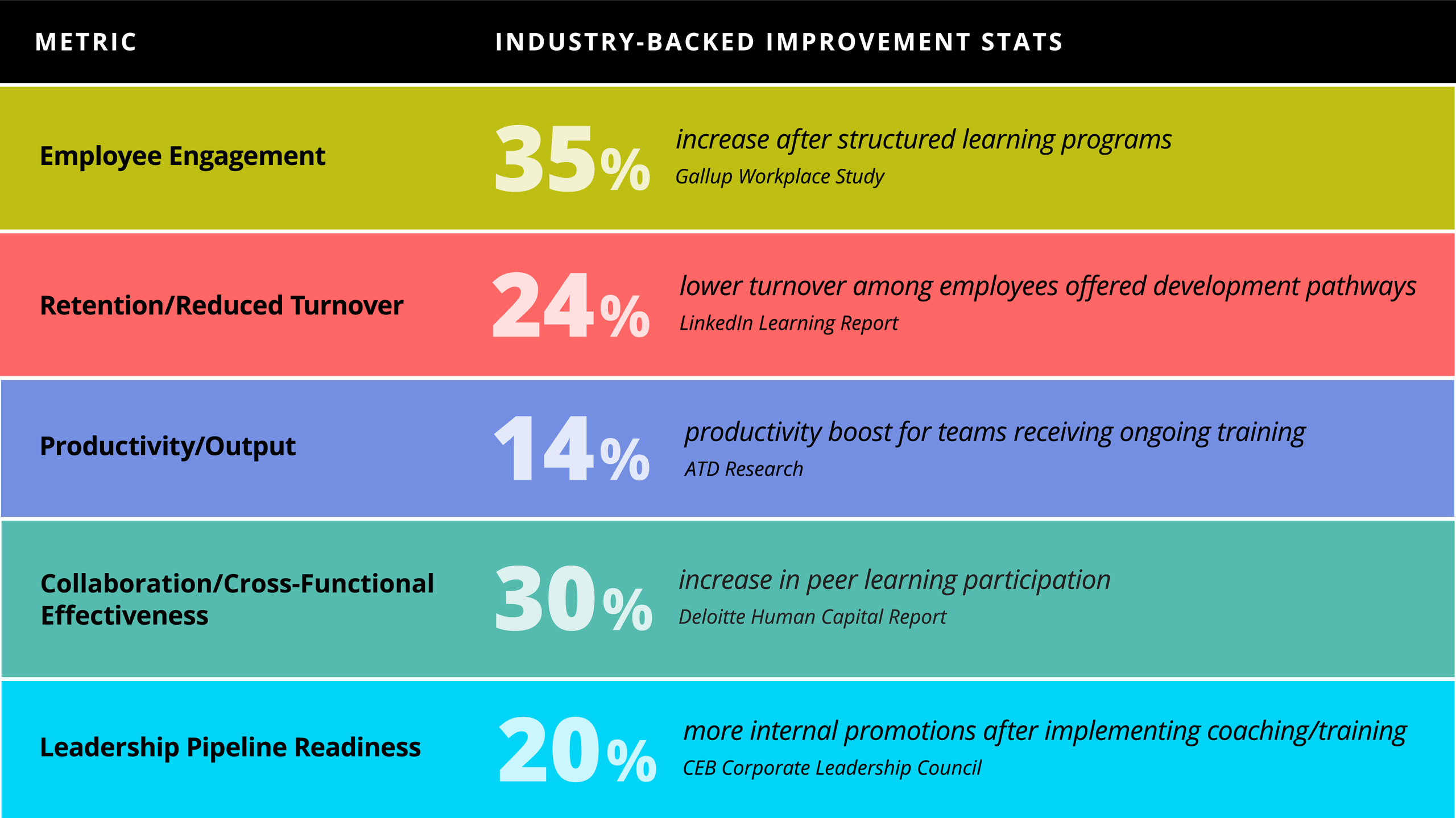
Industry Metrics Regarding Key Benefits of Corporate Training
Future Trends in Corporate Training and Development
The landscape of corporate training is evolving rapidly. Technology plays a significant role in driving these changes. Organizations need to stay ahead by adopting emerging trends. AI and machine learning are transforming corporate training. They offer personalized learning paths that adapt to individual needs. This ensures that employees receive targeted support. Microlearning is gaining traction as a popular training method. It involves short, focused training modules that fit into busy schedules. This approach improves retention and engagement.
Future Trends in Corporate Training:
- AI and machine learning for personalization
- Microlearning for efficiency and retention
- Virtual and augmented reality for immersive experiences
Virtual and augmented reality provide immersive training experiences. They create realistic scenarios for skill practice and development. This hands-on approach can be particularly useful in technical and safety training areas.
Staying informed about these trends is critical for success. Organizations that embrace new technologies and methodologies will enhance their training programs. This not only improves employee skills but also boosts overall company performance.
Conclusion: Building a Culture of Continuous Corporate Learning
A robust corporate training strategy is not just a one-time effort. It lays the groundwork for a culture of ongoing learning. Such a culture supports both employees and the organization in evolving together. By prioritizing corporate education programs, companies can drive growth. Employees gain skills that enhance their job performance. This, in turn, contributes to the company’s success.
Incorporating continuous learning into the workplace ethos fosters engagement and innovation. It encourages employees to take initiative and pursue new challenges. Ultimately, a learning culture becomes a key competitive advantage, leading to sustained progress and development.
Ready to design your engagement?
Tell us what your team needs to do next, and we’ll walk you through what a tailored CEG engagement could look like — from listening through iterating.